Skip to content

Agrifood

Vivici: dairy making without cows

Approach

Direct investment

Date

February 25, 2026

Reading time

7 minutes

Vivici produces whey proteins through precision fermentation and is thus an important player in the protein transition. Invest-NL helps the startup to reach the next phase of its growth.

On Vivici's website, they proudly showcase how many ‘amazing’ employees the company has, the years of experience accumulated, in which countries the company has already worked...  and how many cows have been milked for the production of dairy protein. Namely: zero. CEO Stephan van Sint Fiet: ‘We are a dairy farm, but without cows.’

Vivici uses a microorganism, a yeast, to produce dairy protein. They have been doing this since 2023, and the process is called precision fermentation. ‘With a cow, grass goes in and milk comes out; with yeast, sugar goes in and milk protein comes out. It produces exactly the same protein as found in cow's milk.'

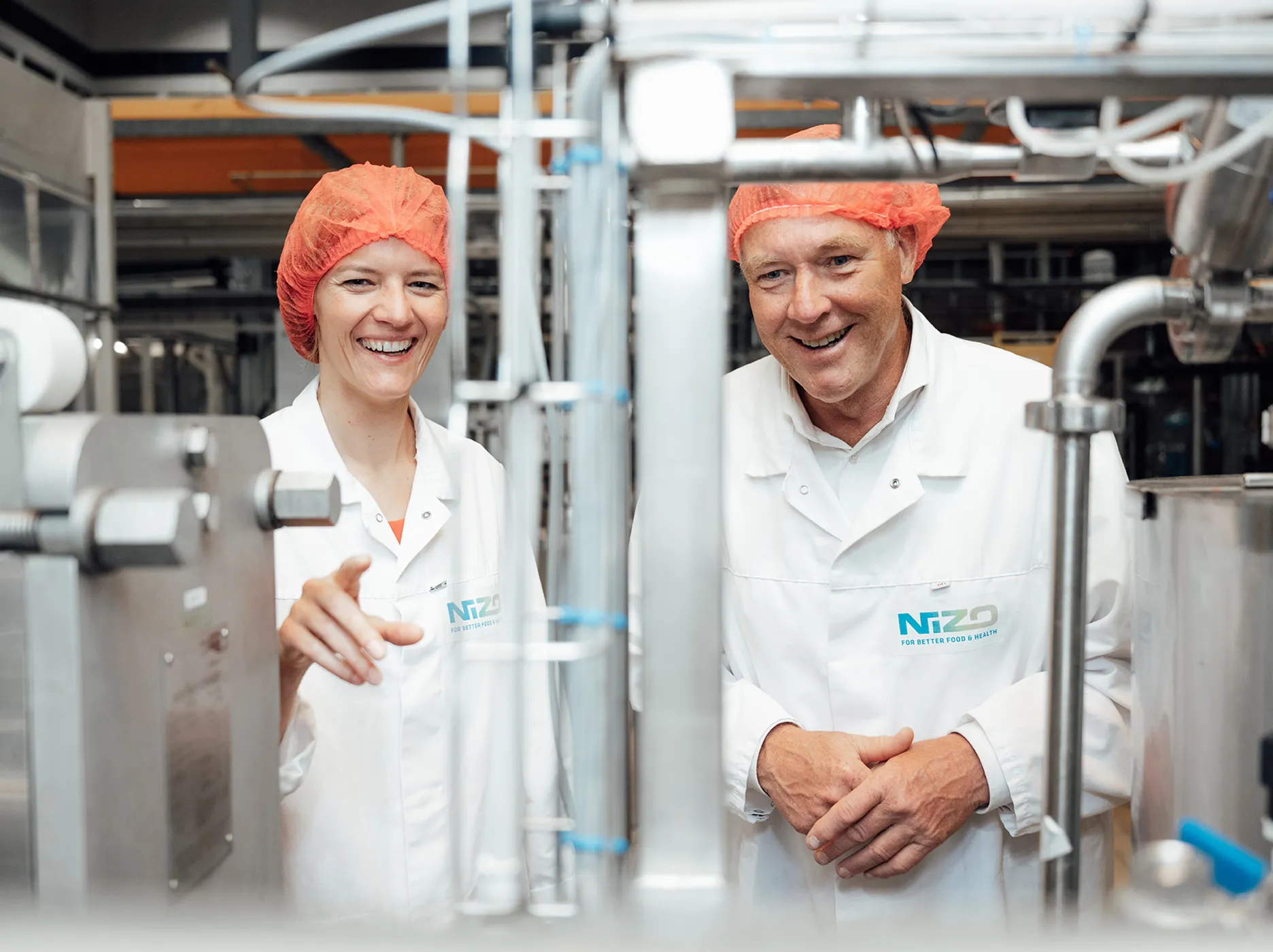
The process is optimised in Vivici's laboratory at the Leiden Bio Science Park; the production takes place in the factories of specialised partners in Europe and Asia, and soon also in the United States. 'The fermentation occurs in large fermentation tanks. The end product is a white powder that we supply to other companies in the food industry.' It is used, among other things, as an ingredient in sports nutrition, protein drinks and bars, milk alternatives, ice cream, yoghurt, cheese, and even meat substitutes – everywhere high-quality, nutritious protein is needed. 'I am still amazed at how many applications our dairy protein can have.'

Peak milk

Peak milk

The main advantage of producing dairy protein via precision fermentation is that it does not have the downsides of traditional cattle farming. Think of its contribution to climate change, the claim on scarce land and resources, animal feed that destroys tropical rainforests, nitrogen pollution, water contamination, animal diseases, and animal welfare issues. 

Stephan: ‘The production of milk with cows can therefore not increase indefinitely in volume. But the demand for dairy protein is indeed growing, as the global population increases and more people become prosperous. Just like peak oil is discussed, there is talk of peak milk: a point is approaching where worldwide milk production can no longer grow. However, production via precision fermentation is scalable. We are already being contacted by companies that are no longer supplied by the dairy sector and are interested in our product.’

Vivici thus plays an important role in the protein transition, which should make us less dependent on animal-based protein sources. Stephan: ‘Much is already technologically possible in the field of precision fermentation. The challenge for a startup like Vivici is to scale up to deliver high-quality protein at a good price.’ In other words: how to make it a profitable business model.

And that’s where Invest-NL comes into play.

We are a dairy farm, but without cows.


Stephan van Sint Fiet

CEO Vivici

Matching missions

Vivici and Invest-NL have known each other since the conferences in the agrifood sector. Stephan: ‘When the time came to increase our equity, we approached Invest-NL. Many banks still consider us too young as a company and therefore assess the risk as high. Additionally, we also find it important to work with a partner with whom we align well regarding our mission.’

For Invest-NL, the protein transition is perhaps the most important focus area in the agrifood sector. Victor Meijer, investment principal at Invest-NL: ‘Our current food system is no longer sustainable, we need to change the way we eat. Innovative protein solutions like those from Vivici have the potential to fundamentally change the way we produce food.’

It is the first time that Invest-NL invests in precision fermentation. The amount involved is €10 million, as part of a Series A financing round, which totals €32.5 million. Other investors include InnovationQuarter, existing Vivici shareholders dsm-firmenich and Fonterra, and pension fund ABP.  'That a pension fund participates as a major investor is relatively new,' says Victor. 'Institutional capital does not often invest directly in startups and scale-ups. Invest-NL is trying to change that. The fact that it is happening now is a great boost and shows that Vivici has a good story.'

Value for the sector

Invest-NL considers Vivici not only an important player because of the potential impact the company can have on the protein transition, but also because of the technology being developed. Victor: ‘The Netherlands is leading in fermentation and cultivated meat, and such innovations are highly valuable for the sector. Companies can learn from each other and strengthen one another. All parties in the “ecosystem” can benefit from what is being developed. With various events, Invest-NL also tries to bring parties together.’

Vivici uses the investment to scale up production and expand its customer base. ‘Additionally, we are further optimizing the fermentation process to reduce costs,’ says Stephan. ‘Moreover, we will launch a second product later this year. It is a dairy protein that boosts the immune system and stimulates our gut flora so that it positively affects our iron metabolism. Isolating this protein from cow’s milk is very cumbersome and expensive. You need 10,000 liters of milk for 1 kilogram of protein. So here too, precise fermentation is a solution.’

Obstacles

Obstacles

Like many other companies in its portfolio, Invest-NL supports Vivici not only with capital but also with knowledge and expertise. ‘We have drafted profiles for the Supervisory Board, and help in searching for candidates within our network,’ says Victor. 

Thanks to an introduction by Invest-NL, Vivici was also able to participate in the so-called Scaling Club, a special programme of the EU. This involves a select group of 70 startups from various countries to connect with investors and innovators. ‘In addition, our Business Development division is active in identifying and removing sector-level obstacles for investors and other financiers. Together with Wageningen University & Research, a so-called assessment framework has been developed for investors interested in fermentation technology. This tool provides them with more insights into risks and feasibility and helps them ask the right questions.’

What obstacles exist in the field of precision fermentation? ‘All startups, but especially when creating a new ingredient, need to explain who they are and what they produce,’ says Stephan. ‘Not only to investors but also to consumers. The way you talk about your product is essential. Furthermore, there are very strict regulations in the food industry. I don’t see this as an obstacle because it’s simply necessary, but it is a factor you have to deal with.’

Innovative protein solutions such as those from Vivici have the potential to fundamentally change the way we produce food.


Victor Meijer

investment principal Invest-NL

Valley of death

Many innovative startups find themselves in a kind of chicken-and-egg scenario, as Stefan explains. ‘You can only deliver at low costs if you have enough market share, but to gain enough market share, you first need to deliver at low costs.’ It is the well-known valley of death challenge faced by startups: initially, you secure funding through subsidies or regional investment companies to develop your product, but then you have to scale up to generate more revenue while the income stream has not yet kick-started. ‘Invest-NL sees it as one of its most important roles to help companies through that phase,’ says Victor. ‘Until they are big enough and new funding can also be attracted from banks and other investment funds.’

What future developments does Stephan see for Vivici? ‘When we are large, it will mean that we have made the impact we want with our mission. We will then produce 10,000 tons of our dairy alternative protein, the equivalent of the protein production of 150,000 cows. It is quite conceivable that we will develop even more products, or that we will deliver directly to consumers, alongside companies. But for now, we are fully focused on becoming really good at what we do now. It is a very exciting challenge to turn a new technology into a successful business model.’


Questions about this investment? Ask Victor.

Victor Meijer

investment principal agrifood